Showing posts with label classic. Show all posts

Friday, November 27, 2015

The Fountainhead

Posted by A Drop of Romeo at 2:00 PM 0 comments
The Fountainhead by Ayn Rand

Age: Adult
Category: Classic
Rating: 3 stars

“My dear fellow, who will let you?”

“That’s not the point. The point is, who will stop me?”


Marta Thinks: Howard Roark is a young architect who believes modern architecture is the intellectual culmination of architecture and vastly superior over classical and traditional architecture. This viewpoint goes against the opinion of the both the public and professionals and The Fountainhead therefore follows Roark’s struggle in exposing his artwork to a world where it is largely scorned. Alongside Roark, there are four other essential characters: Peter Keating, a vapid architect who moves up the social ladder due to his sycophantic nature; the mercurial and passionate journalist Dominique Francon; Gail Wynan, owner of a famous newspaper who yearns to be more, and Ellsworth Tooheny, who seeks to undermine Roark at every step. Each character meets Roark and each one is deeply and profoundly disturbed by him because, according to Ayn Rand, he is the ideal man. Indeed, Roark fully embodies her philosophy of promoting individualism and selfishness (which Rand believes is a virtue, while selflessness is a vice).

The Fountainhead itself seems to mirror Roark’s architecture: neat and straight-forward but almost coldly impersonal, detached from the reader, almost as if going, “This is how I am and I don’t care what you think.” It leaves you a bit reeling, a little overwhelmed, though not emotionally moved. But this is exactly why I think it is worth recommending — because it makes you think. You might not end up agreeing with Ayn Rand’s views or find Roark admirable (I, personally, did not) but that hardly matters. What matters is that a book has violently challenged you and you’re going to have to defend yourself. So while The Fountainhead might not the best book I’ve ever read, it has certainly been the most interesting.
Friday, November 13, 2015

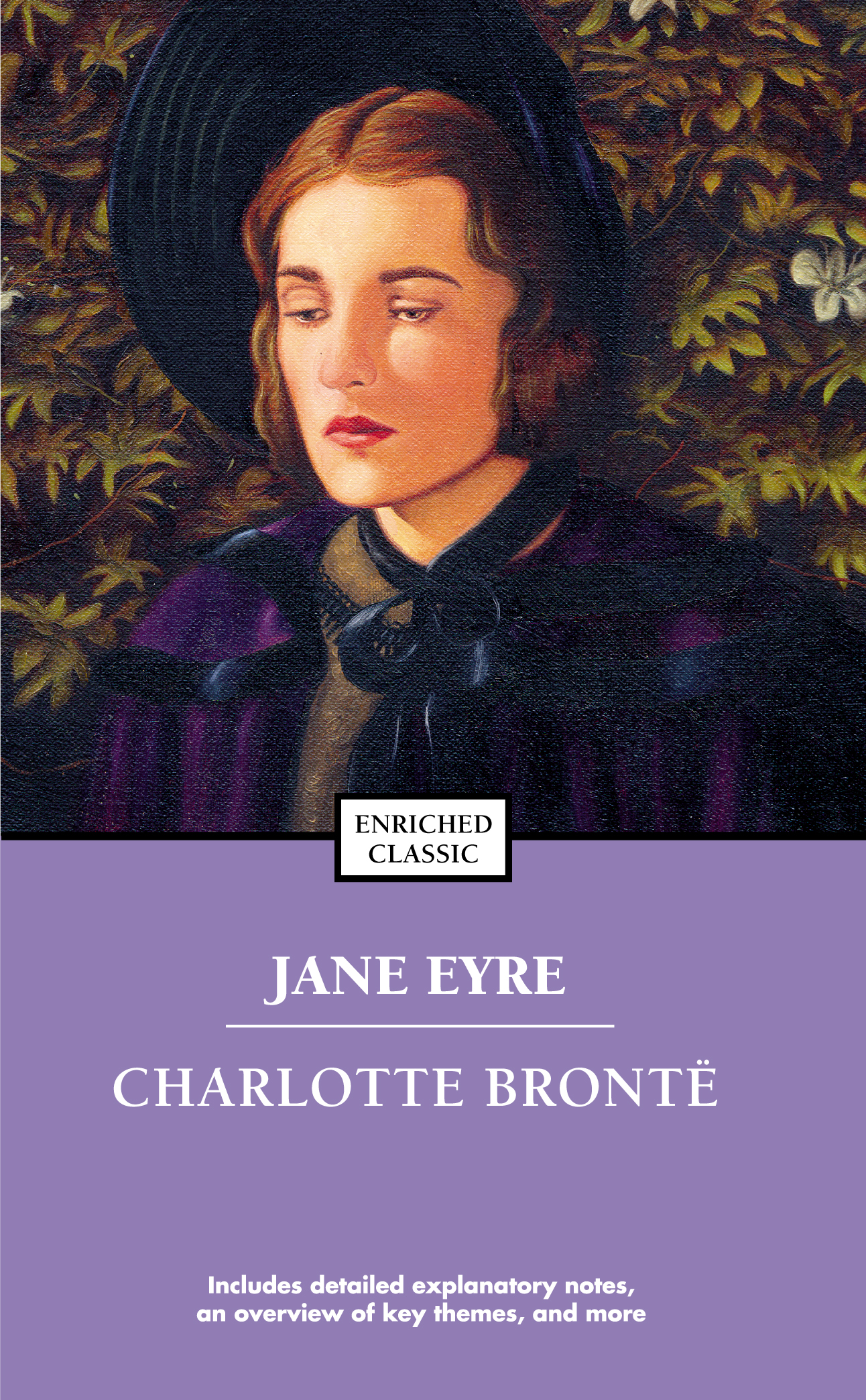
Jane Eyre

Posted by A Drop of Romeo at 2:00 PM 0 comments

Jane Eyre by Charlotte Bronte

Age: Young Adult/Adult
Category: Classic; romance
Rating: 4.5 stars


Juliet Thinks: When Jane Eyre was first published in 1847, Charlotte Bronte did not use her real name. Instead, she published it under a male pseudonym, Currer Bell.

Narrated in first person, the novel begins in Jane's childhood as an orphan living with her cruel aunt and cousins. Later on, Jane attends an institution for orphaned girls, in which she is educated in several subjects. Then, she chooses to work as a governess for Thornfield Hall, Edward Rochester's great estate. One of the greatest elements of this novel is that of the uncanny and supernatural. Jane hears strange screams in the night and notices other Thornfield staff acting suspiciously, but she has no idea what is actually going on, all whilst falling for Mr. Rochester.

Jane Eyre was absolutely revolutionary in its feminist themes at the time it was published. One of its most spectacular quotes delineates the oppression of women and their desire to break out of prescribed gender roles:

"Women are supposed to be very calm generally: but women feel just as men feel; they need exercise for their faculties, and a field for their efforts, as much as their brothers do; they suffer from too rigid a restraint, too absolute a stagnation, precisely as men would suffer; and it is narrow-minded in their more privileged fellow-creatures to say that they ought to confine themselves to making puddings and knitting stockings, to playing on the piano and embroidering bags. It is thoughtless to condemn them, or laugh at them, if they seek to do more or learn more than custom has pronounced necessary for their sex."

I found Jane Eyre to be a likable character because of her feminist tendencies. As shown in the passage above, Jane often thought deeply about how she wants to be more than an object of male affection. She chose the paths that would lead to her autonomy; she refused to be dependent on the financial support of anyone. In the 19th century, this was a very radical notion for women to have. It's for this reason that many critics were taken aback by Bronte's novel. One critic said, "We do not hesitate to say that the tone of mind and thought which has overthrown authority and violated every code human and divine abroad," regarding Jane's departure from Victorian femininity.


Friday, October 23, 2015

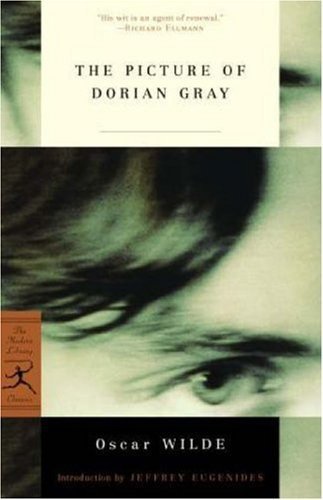
The Picture of Dorian Gray

Posted by A Drop of Romeo at 2:00 PM 0 comments

Age: Adult
Category: Classic; fantasy
Rating: 5 stars


Marta Thinks: When Oscar Wilde was asked to name his hundred favourite books, he said he could not. When asked why, he replied, “Because I have only written five.” Witty and outrageous, Oscar Wilde was one of the best writers of the 19th century, if not of all times. Hyperbole? No, not a hyperbole, every word is deserved. A factual description then, of an irresistibly mesmerising and intelligent individual whose artistic ability is disputed by none. His most notable novel, The Picture of Dorian Gray, does not propose a new plot (reminiscent, perhaps, of Stevenson’s Dr. Jekyll and Mr. Hyde, where there is a duality associated with a single human being), but Wilde is indisputably original, unrestrained as he explodes with outrageously clever ideas.

This is largely due to the fact that Wilde was part of the aesthetic movement, which encouraged writers to break free from the restraints and limitations society imposed, even in terms of moral etiquette. Wilde went even further and introduced the idea that an artist’s life holds more importance than any work he produces, i.e. his life is to become his most important masterpiece. This idea can be seen in The Picture of Dorian Gray, where Dorian’s life and portrait are inextricably linked, and their individual significance is questioned. Dorian trades his soul for the immortality of his beauty and his portrait is a mirror of how his own life degrades into nothing.

A relatively good amount of the novel is summarised in the preface, in which Oscar Wilde poses statements related to art, such as “The artist is the creator of beautiful things” or “There is no such thing as a moral or an immoral book. Books are well written, or badly written. That is all.” Of course, these statements can be challenged and debated ad infinitum, which reflects rather neatly the novel itself. The first quote brings up the most implications: does art have to be beautiful? What can we define as beauty? Is Basil no longer an artist once his painting is ruined by Dorian’s crimes? Oscar Wilde’s response to this is also in the preface: “Diversity of opinion about a work of art shows that the work is new, complex, and vital.”

Critic Roland Barthes wrote in 1967 an essay, The Death of the Author, in which he argued against including the artist’s biographical and social context into interpretation and that the creation must be separate from the creator, e.g. It does not matter whether the author intended for the red colour of the curtains to symbolise death; what matters is that they represent death. Ultimately, it does not matter what Oscar Wilde believed or did not believe; what matters is how The Picture of Dorian Gray becomes a mirror for own lives, allowing us to answer the ubiquitous questions concerning human existence.

Friday, April 24, 2015

Persuasion

Posted by A Drop of Romeo at 6:54 PM 0 comments

Persuasion by Jane Austen

Age: Adult
Category: Classic; romance
Rating: 5 stars


Marta Thinks: What would you consider your favourite Jane Austen book? Pride and Prejudice: ‘…light, and bright, and sparkling…’? Or Emma: ‘…a heroine whom no one...will much like…’? Maybe Sense and Sensibility, or Northanger Abbey, or even Mansfield Park. (The latter which, by the way, I have never been able to finish.) But what about Persuasion? The story of a woman who has ‘…a second spring…’, a second chance at love. Jane Austen’s last novel, and there’s a tinge of bittersweetness to it.

Eight years before the story begins, Anne Elliot, our protagonist, was betrothed to a naval officer, Frederick Wentworth, but broke off the engagement after her mother’s friend, Lady Russell, voiced her disapproval. Now twenty-seven, Anne Elliot seems doomed to perpetual spinsterhood, until Wentworth comes back, wealthy and in search of a wife. The plot may initially appear deceptively simple, but with the introduction of Mr. Elliot - distant cousin and heir to Anne’s father’s estate - and widow Mrs. Smith, there is a backplot with an element of mystery.

The best version of this novel is the Oxford World Classics edition, in which the introduction is a wealth of information. Particularly noteworthy point is that ‘the speed with which Austen recounts the story [of Anne’s past courtship] and arranges for it to reach its close is remarkable. It almost suggests...that storyline of youthful romance feels to her slightly dull - as if what interests Austen now is how people who have pasts do their loving.’ I think that sums up Persuasion rather elegantly. Austen makes it clear that what we are reading now is a delicate new love story, completely divorced from the ‘youthful romance’ and that its characters must find a new way to love and appreciate each other.

Friday, November 21, 2014

1984

Posted by A Drop of Romeo at 1:00 PM 0 comments
1984 by George Orwell

Age: Adult
Category: Classic
Rating: 5 stars


Marta Thinks: In order to read this masterpiece, you need to appreciate the history behind it. In 1917, civil war broke out in Russia and eventually the Bolsheviks gained power. By 1921, their Communist party was established, though its leader, Lenin, died, leaving two candidates: Trotsky and Stalin. Stalin was the underdog, only the General Secretary, but by 1926 he removed all former members of the government (his position as secretary allowed him to move his friends to influential positions), created trials to dismiss men with power and exiled Trotsky, who would later be described as a ‘Capitalist spy’ in history books. Stalin soon found himself in a position of power and the secret police and the cult of his image allowed him full control, which also spread a feeling of fear and uncertainty throughout the USSR. No one knew who to trust, no one knew what to do. Some people were tortured beyond pain imaginable and begged for the end to come, others were sent to concentration camps in Siberia, forced to work under harsh winter conditions and then left to die. At times, a person had committed no crime but was arrested nonetheless in order to fulfill a certain quota. Because of this, Stalin is responsible for 60 million deaths. To illustrate this point, there is an anecdote in which Stalin meets with a leader of an African nation and this leader asks: ‘How many people did you have to kill in order to establish your rule?’ Stalin tells him and this leader is astonished because it’s more than the number of people who live in his country.
 

A Drop of Romeo Template by Ipietoon Blogger Template | Gift Idea